
The UAE, specifically Dubai and Abu Dhabi, is an attraction for international entrepreneurship. Its promise of a low-tax environment, top-class infrastructure, and direct access to prime global markets makes it the eventual destination for international growth. However, just completing your business formation in Dubai or getting your business license in Dubai is only the first move. The real success in the Gulf hinges on comprehending and respecting the remarkable mixes of convention, relationship-building, and global professionalism that describe the UAE business culture. It is a culture where trust precedes agreement, and patience is your most useful asset.
Table of Contents
The Core Foundation – Relationships Over Transactions
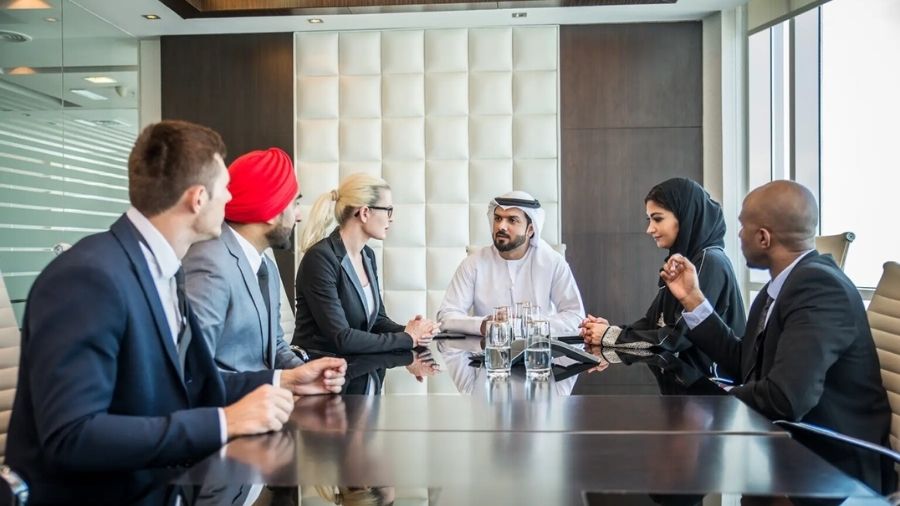
In several Western markets, UAE business is extremely transactional – effective and the bottom line dominates. In the United Arab Emirates, the UAE business culture is fundamentally relationship-oriented.
1. Trust First – Business deals are usually constructed on personal relationships and mutual respect. Expect meetings to begin with lengthy small talk about family, health, and typical well-being before any discussion of the agenda. Rushing this stage is deemed rude and can jeopardize a potential collaboration.
2. Patience is Paramount – Decision-making can take remarkably longer than you may be accustomed to. UAE business culture usually demands several meetings, sometimes over a number of months, before a formal contract is reached. This is a sign of detailed due diligence and trust-building, not inefficiency.
3. The Concept of Wasta – Wasta literally means influence or connections. While not a substitute for merit, having robust personal connections and a strong standing can remarkably facilitate procedures, particularly when handling complicated government or hierarchical systems. This reinforces the need for genuine networking.
Etiquette in Meetings and Communication

The way you present yourself in a meeting is usually more crucial than the content of your proposal.
A. Greetings and Interaction –
1. Handshakes – A handshake is the standard greeting. However, always utilize your right hand for handshakes, passing objects, or getting business cards, as the left hand is culturally considered less clean.
2. Gender Dynamics – When greeting a woman, men should wait for the woman to extend her hand first. If she doesn’t, a nod or placing the appropriate palm over the heart is a respectful option. Sidestep prolonged eye contact with the opposite gender.
3. Titles and Respect – Always address senior figures with respect, utilizing titles such as Mr., Ms., or Doctor followed by their last name, unless explicitly invited to utilize a first name. In government dealings, use Your Excellency. Showing respect to the most senior person in the room first is vital.
4. Hospitality – Hospitality is a cornerstone. Always accept the delivery of Arabic coffee or tea. It is a sign of respect and goodwill.
B. Communication Style –
1. Indirectness – Communication can be indirect, specifically when dealing with refusals. A polite non-committal response or a softening of a no may be utilized to sidestep making a direct, face-losing refusal. You should learn to read between the lines and ask clarifying questions patiently.
2. Business Cards – Exchange business cards with your right hand or both hands. When receiving a card, take a moment to look at it prior to putting it away, as a sign that you value the connection. It is extremely advisable to have cards printed in both English and Arabic.
3. Technology – WhatsApp is broadly utilized for both formal and informal business communication in the United Arab Emirates, including sharing documents.
Religious Observance, Dress Code, and Time
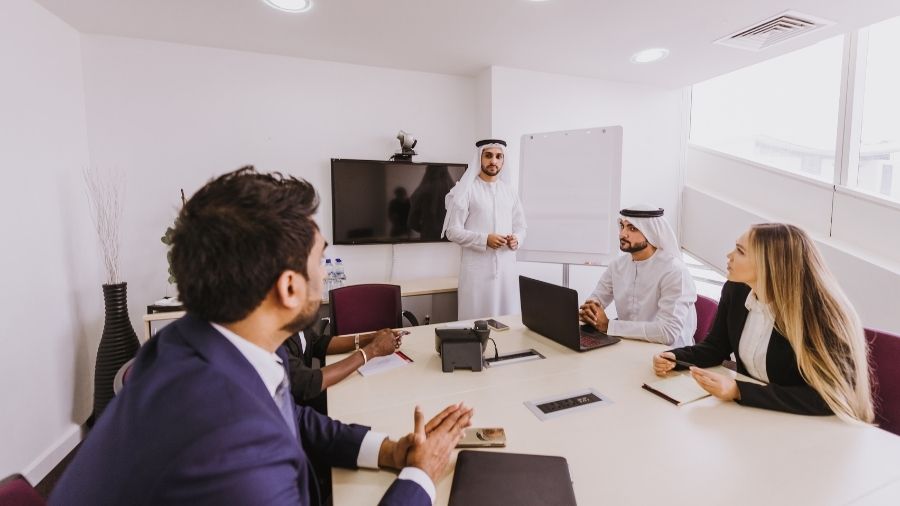
As an Islamic nation, religious methods heavily influence the UAE business calendar and regular routine.
A. Respecting Islam and Holy Times –
1. Ramadan – During the holy month of Ramadan, all workplaces operate on reduced hours. It is deemed disrespectful to eat, drink, or smoke in public during daylight hours, even for non-Muslims. Sidestep scheduling crucial meetings during this month, as energy levels are lower.
2. Prayer Times – Muslims observe five regular prayers. Sidestep scheduling meetings that coincide with these times, and be aware that meetings may be paused for prayer.
3. Working Week – The UAE’s standard work week for several companies is now Monday to Friday, aligning with the international markets, with Friday being a half-day and Saturday and Sunday being the weekend.
B. Dress Code –
1. Modesty is Key – In all business settings, conservative and modest attire is expected. Men must wear well-tailored suits and ties. Women must wear expert attire that covers the shoulders, upper arms, and knees. Modesty presents respect for local customs.
C. Punctuality and Patience –
1. Be Punctual – As a foreign expert, you’re expected to be punctual for all scheduled meetings, as this presents respect for others’ time.
2. Be Patient – However, be ready for meetings with local counterparts to begin late or be interrupted. Adaptability and patience are crucial, as the connection usually takes precedence over a rigid schedule.
Navigating the UAE Business Setup Landscape

Cultural fluency extends to handling the UAE’s particular legal and management structures. Working with seasoned business setup consultants in Dubai, such as Start Any Business (SAB), is extremely beneficial to sidestep typical pitfalls and ensure smooth market entry.
Choosing the Right Jurisdiction
Your business strategy should align with your selected legal framework –
1. Mainland Business Formation – Permits you to perform business directly with the local UAE market and government units. Current reforms permit 100% foreign ownership for most activities, removing the old local sponsor demand.
2. Freezone Company Formation – Perfect for companies concentrated on global trade or particular industries. Free zones deliver 100% foreign ownership, 100% repatriation of profits, and streamlined procedures.
3. Offshore Company Formation – Majorly for holding assets, intellectual property, or for global transactions outside the United Arab Emirates. These corporations are typically banned from trading within the United Arab Emirates.
Overcoming Cultural Hurdles in Setup

1. Documentation – While English is broadly utilized, all official agreements, licenses, and government documents require or benefit from an Arabic translation. Consultants make sure of linguistic and legal precision.
2. Hierarchy – When dealing with government departments, constantly respect the hierarchy. Decisions are usually referred up the chain of command, which contributes to the lengthy decision-making procedure.
3. Cash Flow – Initial formation expenses can be high. In addition, because of rigorous due diligence, opening a corporate bank account can take 2-8 weeks, delaying your capability to transact. Clear cash flow planning is vital, and consultants can assist in expediting the procedure.
The Cultural Commitment to Success

The UAE Business Culture is like a colorful and intricate pattern made up of different elements such as Islamic traditions, Bedouin hospitality, and global ambition mixed together to make the whole thing beautiful and rich. The main source of success for foreigners who want to get engaged is not only having an excellent product and strong financials, but also being sincerely committed to cultural understanding.
You can build a very strong base for lasting success in the Gulf if you give priority to relations, observe customs (from how to greet people to fasting during Ramadan), and use the help of good business setup services in Dubai to guide you through the difficult process of setting up a company in the Dubai mainland or in a UAE free zone.
The UAE will be a great place for you to raise your business if you develop your cultural intelligence.
Also Read: Why the Emirates ID is Essential – Top 10 Benefits Explained
Frequently Asked Questions
1. What is the UAE business culture like for foreigners?
It is extremely relationship-focused, hierarchical, and sophisticated, combining contemporary international methods with robust standard Islamic and Arab customs. Faith and personal rapport are critical preconditions for successful trades.
2. How do I build relationships with UAE business partners?
Prioritize face-to-face meetings and invest time in small talk, such as discussing family and health, before addressing business matters. Show tolerance, dedication, and true respect for their culture and seniority. Always follow up, as reliability fosters long-term trust.
3. What are the common etiquette and customs in UAE business meetings?
- Greetings – Utilize a gentle handshake (use your right hand only). Wait for a woman to start the handshake.
- Dress – Keep a modest and formal dress code (suits for men, conservative attire covering knees/shoulders for women).
- Hospitality – Always accept Arabic coffee or tea; it’s a sign of goodwill.
- Seating – Sidestep showing the soles of your shoes.
4. Are there cultural challenges for foreign entrepreneurs in the UAE?
Yes, typical difficulties include the slower pace of decision-making, the required for Arabic translation in official documents, handling complicated regulatory distinction between Mainland and Free Zones, and delays in opening corporate bank accounts.
5. How does negotiation work in the UAE business environment?
Negotiation is usually a longer, more indirect approach concentrated on reaching agreement while maintaining harmony (face-saving). Sidestep forceful conflict. Initial reactions may be unclear, requiring you to use patience, explain details, and depend on established connections to facilitate the operation.
6. Is networking important for business success in the UAE?
Extremely significant. Business success is usually connected through reliable personal connections and referrals, instead of cold pitches. Constructing a robust network in business councils, free zone events, and industry expos is necessary for market direction and accessing key decision-makers.
7. How do I adapt my business practices to fit UAE culture?
Be adaptable with timelines and patient with bureaucracy. Adjust your work plan to appreciate Ramadan and prayer times. Confirm exact hierarchy is observed in communication, and utilize formal titles until requested otherwise.
8. What mistakes should foreigners avoid in UAE business culture?
Sidestep rushing the decision-making procedure or forcing a fast “yes.” Never publicly attack the government, faith, or local customs. Do not utilize your left hand for shaking hands or passing objects. Constantly confirm your attire is fair and professional.